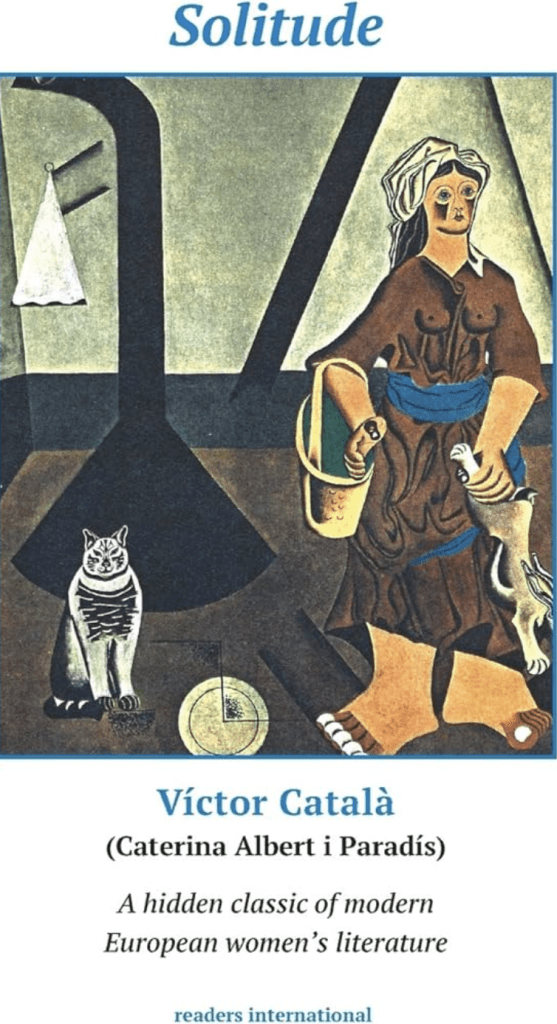
In 1898, Caterina Albert won the prize for literature in the Jocs Florals literary competition. This win sparked a considerable scandal when the jury learned that the author was actually a young girl. As a result, Caterina Albert refused to present her work or accept the award, and from then on she used the male (and snarkily patriotic) pseudonym of Víctor Català for her writings, taking the name from the protagonist of a novel she was planning but never finished.
Unfortunately, this intriguing tidbit of trivia is the most interesting thing about this novel for Aaron. Rodney and Ilsa are a little more generous in their critique. That’s right: this month’s discussion includes their inaugural guest.
A listener has kindly brought to my attention that a portion of the episode appears to be missing from the file we uploaded today. I listened to the episode myself and, sure enough: the audio jumps from “Let’s talk about this email” right to “and now it’s time for book ranking!” Listening even further revealed that it happens a second time toward the end… We jump right from the fourth books on our banned list right to a moment or two before the end of the recording. I checked the original file and the original file has the same flaw. Our only answer to this is that we might have inadvertently paused our recording somehow while taping.
This is an embarrassing blunder on our part, but the only way to address it is to apologize for it and move on or remove the episode entirely. We’re opting to just admit that we’re imbeciles and be extra careful to prevent this in the future.
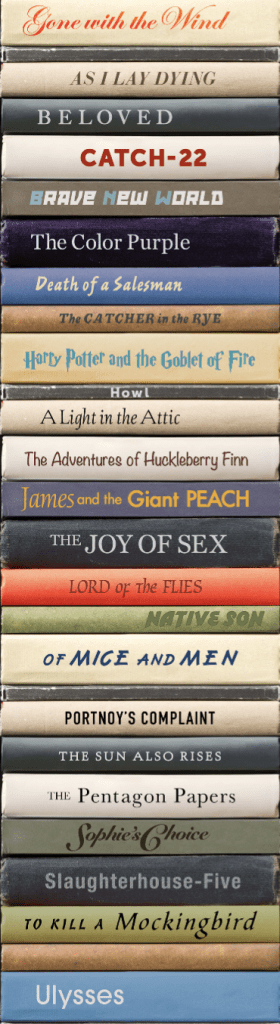
For those who can’t handle the accidental cliffhanger, we’re going to reprint our banned books list here. The books we discussed and mentioned were as follows:
The Kite Runner
Slaughterhouse-Five
A Prayer For Owen Meany
The Adventures of Huckleberry Finn
The Satanic Verses
Fahrenheit 451
The Sun Also Rises
The Catcher In The Rye
We also made special mention of The Call of the Wild and Les Miserables. The two books we discussed that somehow got excised from the recording were To Kill A Mockingbird (Rodney) and Maus (Aaron).
We’ll address the email that got purged in a future episode.
We apologize sincerely for this mishap on our part.
The episode with our discussion on Solitude will drop on October 18.
The episode of Just In Case We Die is the first installment in an experiment of sorts. This experiment was prompted by a discussion I had with a regular listener. This listener had very kind things to say about the content of our programming. They made a recommendation for a book that we should read and discuss, a novel by a beloved American writer that appears nowhere in the original list. This listener also said that they enjoy our program so much that they wish we could drop episodes more frequently.
That got us thinking: Is there a logical reason that we couldn’t do two episodes per month instead of just one? We obviously can’t discuss two books per month– ain’t nobody got time for that— but we could devote airtime to book-related content. There is truly no shortage of ideas for material: we could discuss the works of writers that do not appear on the list, discuss the movie adaptations of books we really enjoyed or read for our program, respond to listener emails, discuss books suggested by our audience, etc. There are also things that we would like to discuss that we don’t necessarily have time for without making our regular episode become a two-and-a-half hour time commitment for fans.
For example . . . The American Library Association has designated the week of October 1 through October 7, 2023 as Banned Books Week. Both Rodney and I are in passionate and adamant opposition of book censorship in any form. We both also have many books that have meant a great deal to us over the years that have somehow managed to find themselves on the overgrowing list of novels that have been challenged or censored. We wanted to take some time to have a conversation about these works of literature, about the nature of banning in general, and whether, in some cases, the complaints about some of these books are warranted. We recorded this special episode with the intention of dropping it during Banned Books Week.
Unfortunately for people who came here today to download our discussion of Solitude by Victor Català, Banned Books Week fell during the week of the month that we normally post new discussions. To drop a discussion of banned books when it wasn’t actually Banned Books Week anymore seemed a pointless undertaking, so we agreed that this month was an excellent time to begin the experiment.
Our first bonus episode, in which we discuss a listener email, make a personal ranking of the books we’ve read so far, and each offer and recommend five novels that have been banned or challenged can be accessed by pushing “Play” on the audio player below. Our discussion of Solitude, which features our friend, Ilsa– our inaugural guest!– will drop two weeks from today.
We do thank all of you for listening to our podcast. We especially thank those of you who have engaged us with us through our various social media outlets. We started this podcast for us, and it means a lot that it actually means something to others as well.
Of the six books we’ve read for this podcast, only one of them so far has not featured a fictionalized version of a real historical figure. This month’s novel even ups the ante on that conceit by presenting a fictionalized account of a historical event. E. L. Doctorow changes the names and some of the details, but this novel is very much about the trial and eventual execution of Julius and Ethel Rosenberg, an American married couple convicted (and subsequently executed) in 1951 of spying for the Russian government, despite the prosecution presenting no hard evidence of their treason. It’s a dark moment in the history of our nation, and Doctorow utilizes fiction, memoir, and academic thesis to examine the repercussions of this historic event on not only the participants but the nation.
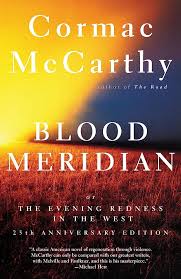
This month, we decided to take a break from our normal routine of using a random number generator on Google to pick our book. Instead, Aaron hand selected a title from the list to honor the passing of one of his favorite novelists.
Cormac McCarthy began publishing novels in 1965. In the fifty-eight years that have lapsed since his initial book, he has published twelve novels, two plays, five screenplays, and three short stories in addition to non-fiction essays. He is the winner of a Pulitzer Prize, The National Book Award, The National Book Critics Circle Award, and a James Tait Black Memorial Prize. He is one of Aaron’s favorite novelists of all time.
Blood Meridian, our selection for this month’s discussion (and #139 on our alphabetized list) is Cormac McCarthy’s fifth published novel. It is an epic historical novel, set in the American frontier. It is rightly considered one of the “great American novels”, but it is not for the faint of heart. It is unrelenting in its brutality, unapologetic in its violence, and cryptic in its ultimate message. Please don’t judge Aaron too harshly for loving this novel as much as he does.
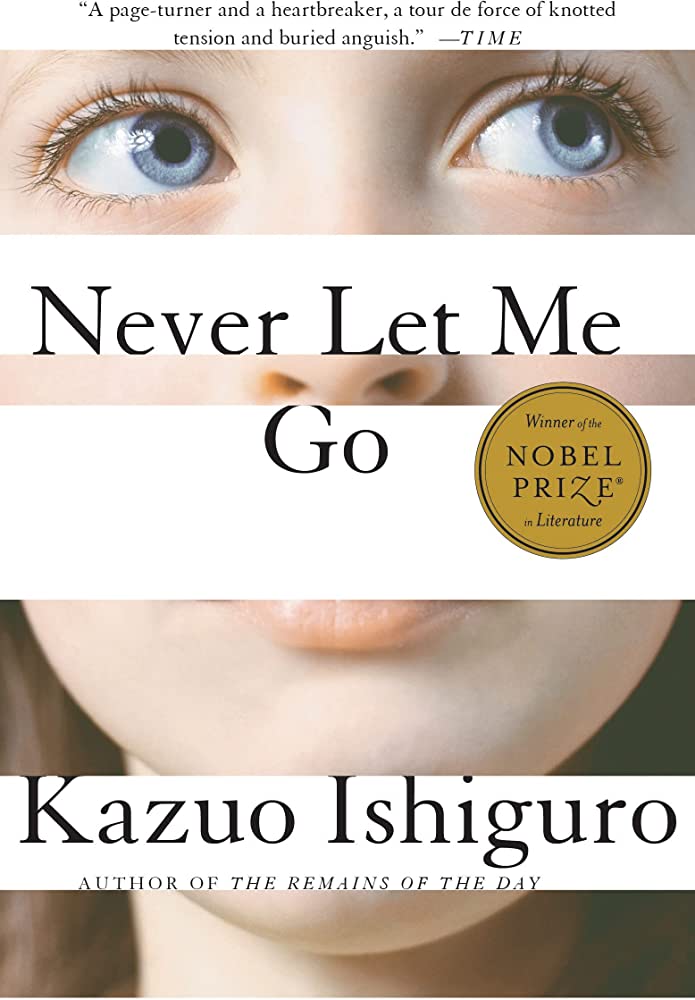
This novel– one of the more unique coming-of-age novels that either Rodney or Aaron have read in years– follows the residents of a boardinghouse for pre-adolescent children over the course of several years. Is it really a boardinghouse, though? Exactly what are “the guardians” of this facility preparing its residents for?
Aaron and Rodney both really loved this heartbreaking novel about loss, friendship, the need for identity, and the very nature of what it means to be a human being. How did the elegant prose of this Nobel Peace Prize-winning author manage to skip under their radar for so long?
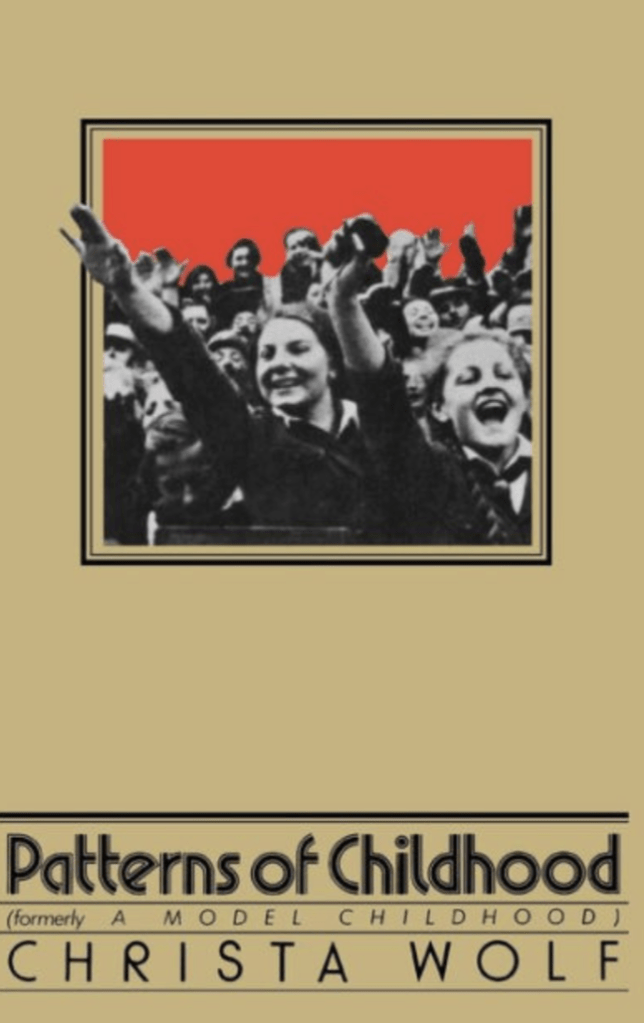
Our selection for discussion this month has a few things in common with the book we read for our last episode: –We had never heard of it before –The author was unknown to us –The novel was originally written in a foreign language –The book’s narrative uses a real event in history as a backdrop to the driving plot trajectory
Our selection this month also had a few differences that we were intrigued by: –The author of this book is a woman –The real event in history utilized to weave the novel’s story is The Holocaust –The plot description on the book’s jacket sounded like something we would actually give a shit about
Part novel, part memoir, part scathing treatise on not learning from the mistakes of your past, “Patterns of Childhood” is a book that neither of us will be soon be forgetting. Join us as we discuss this thought-provoking post-modern take on the fragility of memory and coming to terms with the sins of your past.
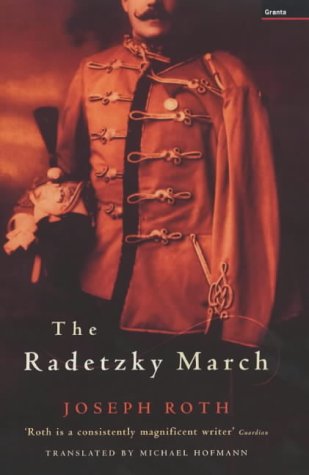
At long last, Rodney and I are finally presenting our discussion of The Radetzky March by Joseph Roth. Due to circumstances beyond our control, we had to trash our first attempt at this episode completely. This episode is our second attempt to record a discussion for this novel. There’s probably a lot that we left out from our first conversation, but the general gist of our thoughts and feelings on this novel are still intact. It’s a varied discussion, complete with hateful diatribes about technology, monumentally anti-climactic character deaths, and the announcement of our next book for discussion.
Neither of us had ever heard of this novel before drawing it randomly from the list. Hell, we had never even heard of the author. To make it worse, the back-of-book plot description did absolutely nothing to make us wish we had. In short, this is not a book that either of us would have bothered to check out had we stumbled upon it randomly at the local library. Rodney stated it best, though, in our very first episode: leaving our comfort zones is part of what this podcast is about.
You’ll see from our discussion that we struggled with this one, but there’s still plenty to discuss.
I hate them with the passionate splendor of a thousand burning suns.
Remember that bully that used to pick on you in middle school? You hated him, didn’t you? Well, I hate computers more than you hated him.
I am not the most tech-savvy person in the world. I’m not even the most tech-savvy person on the street where I live. I am barely the most tech-savvy person in my home, and, as I write this, I am the only occupant besides a feisty cat and a rambunctious boxer. I find it more and more frustrating that so much of what I need to get done every day relies on computers and technology.
I can’t keep an accurate accounting of what the Cub Scouts in my Arrow of Light den have left for rank completion because the Boy Scouts of America uses a website for tracking. This website is almost always under maintenance. There are nights that I stand around at work, getting paid to do fuck all, because the system has crashed, grinding our entire operation to an abrupt halt. I can’t even do routine maintenance on my own car anymore because every single function of the vehicle is controlled . . . by a computer. If I could record a podcast with a tape recorder, a length of twine, and two empty soup cans, I would. Anything to avoid the frustrations that keep us from releasing a quality podcast on a consistent schedule.
And that, dear friends, is the point here today: these infernal electronic machines– the ones that, in theory, are supposed to make our lives easier– have screwed Rodney and I out of being able to release our discussion of The Radetzky March today as we had planned. We recorded it last Friday night. Later that evening, when I sat down to polish off the edit, I was confronted with an audio file, of approximately one hour and ten minutes long, that had no sound. It played– you could see the little timer thingie ticking away the seconds as the file progressed– but you couldn’t actually hear anything that was playing. I contacted customer service, sat in an awkward live chat with a tech representative for almost two hours, and was then informed that the audio file was “corrupt” and could not be recovered.
I should point out at this time this was not the first anger-inducing contact with the technical support team of Soundtrap that I had been party to recently. This was, in fact, the eighth or ninth consecutive week that I have had to endure hours-long requests for assistance from their team of– and this is as nice as I can put this– fucking goons. Usually, eventually, they are able to help me. This time, they could not.
When we started The Devil’s Archive, we opted to use Soundtrap for our podcast editing software because it was inexpensive. Also, it has functionality on a Chromebook, which is the main system I use for my writing. Most importantly, though, was the editing capabilities that did not require us to learn keystrokes or push-button combinations. It has a very user-friendly editing interface that allows you to make a transcript of the entire recording. You can then just go into the document it creates and excise the words and phrasings that you want removed, similar to how one might have edited a term paper in college. We loved it, and it worked very well for us without a problem for about sixteen episodes.
Starting around episode 17, we began to experience a litany of issues that just kept getting progressively worse from week to week. Attempts to edit would lock up my laptop. A few times we could edit but then were unable to save the changes. There was one instance where the playback had a weird, echoing reverb effect on the audio that we couldn’t turn off no matter what button combination we pushed. Multiple episodes had to be physically downloaded by the support team and then stored onto Google Drive so that I could retrieve it myself for uploading into Buzzsprout. You may recall that we had to make apologies for the quality of our very first discussion episode of Just In Case We Die because we were experiencing technical difficulties that could not be solved by their support crew. Ultimately, what has begun to happen is that what used to take me forty-five minutes to an hour every week is now taking five or six hours spread across multiple days. My patience was already beginning to wear thin before Soundtrap physically lost our audio file.
So . . . this has been long-winded, for sure, but we felt that our circumstances warranted explanation. Rodney and I promised a new episode today, and we just cannot deliver on that vow. We would if we could, but Soundtrap currently has more excuses and assurances that the issues will be fixed “soon” than they have access to our recording. As much as it feels like poor form to be “skipping an episode” this early in the game, we see no other option but to re-record our discussion. To do this, however, we need a different podcast software that will be compatible with my Chromebook.
The episode that we promised today will be recorded again as soon as we find new software. The second attempt will be posted on May 10, which is the date we had slated for what would have been episode 3. We did pick the third book at the end of the “lost” episode, so this delay somewhat works out in our favor because the next book is really obscure. It has also been out of print for years. Don’t get us wrong– it looks FANTASTIC!– but we’re going to need a little extra time anyway to procure copies that don’t cost us a couple hundred dollars on eBay.
We do apologize for not having an episode to present today. The lack of new content was way beyond our control. If you take anything from this post today, let it be two things:
1) We agonized for many days over this decision. Our commitment to presenting a quality program is delayed, but not hindered, by this snafu.
2) Don’t use Soundtrap. It’s a garbage, useless product that will eventually make you wish you were dead.
In the meantime, go to your library and find a copy of The Radetzky March. We’ve inadvertently given you a couple of extra weeks to read a book that we didn’t enjoy very much. Oh, wait. That was a spoiler.
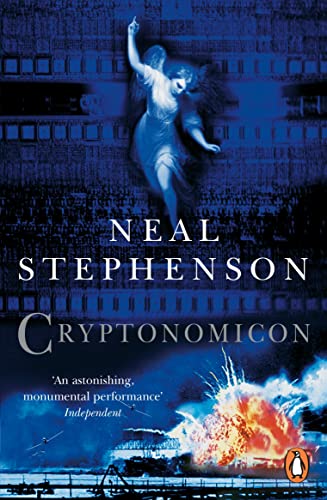
It starts with a haiku and ends with a river of gold. The 900+ pages in the middle are simultaneously funnier than hell and gut-wrenching to behold.
Japanese gold. Explanations of complicated mathematical algorithms. Analysis of WWII codebreaking technique. Suspense around the building of a contemporary and undetectable data haven. Fictionalized depictions of real-life events. Douglas McArthur. Captain Crunch. This novel has a little bit of everything.
But it’s not for everybody . . .
Join Aaron and Rodney as they discuss this not-quite-science-fiction science-fiction novel from a modern (and inarguable) master of the genre.
As we mention in the episode, Rodney and Aaron are both hungry for discussion with our listening audience. Leave comments here or on our Facebook page. Come and join the group on Goodreads! In addition, you can also email us at justincasewediepod@gmail.com.







 Just In Case We Die