Remember last December when the crew at Just In Case We Die celebrated the holidays and National Read A New Book Month by combining both into one gift-giving effort? Well, they decided to do that same thing again (even if two of them still haven’t finished the books they were given last year).
Classic titles, obscure titles, novels by authors who have been mentioned repeatedly on the show, and one cast member tricked into reading a wholly new genre. Six new books up for discussion.
Happy holidays!
Press PLAY on the media player below to hear the latest episode!
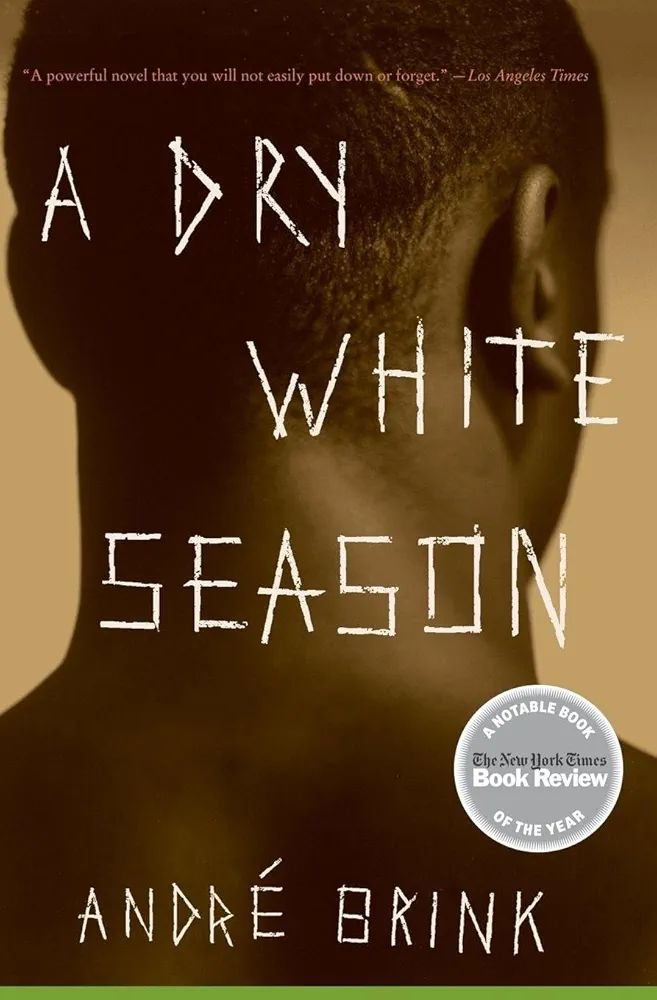
André Brink’s A Dry White Season is a great example of the sort of novel Aaron, Rodney, and Rebecca are describing when they classify a book as “essential.”
First published in 1979, this thought-provoking story recounts the journey of a white Afrikaaner as he transforms from a passive observer into an active challenger of injustice. Emphasizing the necessity of taking action against oppression, this novel explores the complicity of white privilege, moral awakening, and the personal costs associated with resistance.
Framed as a deceptively simple legal thriller, this is not a novel they will soon be forgetting.
All three cast members of Just In Case We Die are acknowledging that their accumulation of books has gotten out of control. The to-be-read piles get increasingly more problematic. This is not a problem that appears to be remedying itself in the near future.
Consider:
1) Next month, each cast member will be given two books by their co-hosts.
2) Every month for the next year, they’ll be reading one book from the list for discussion.
3) Each of them will, more than likely, receive many books for Christmas.
4) Aaron has committed himself to reading every Salman Rushdie novel that has been published (and has, somehow convinced the others to pick authors of their own)
This list isn’t even counting the books that will catch their eye in reviews and bookstore displays!
Something clearly has to be done.
For November’s bonus, each of our literature lovers are picking three books from their ever-growing piles and making a commitment to read it. From post-modern masterworks to revolutionary science-fiction, from memoirs to recent award winners, from pulling the trigger on a dauntingly-long series to a recommendation from one of their own, these lists run the gamut and are sure to be surprising.
It’s Aaron’s turn to handpick a book from the list, and he selected Italo Calvino’s 1979 post-modern masterpiece. This novel is one that he has admired for more than a quarter century. In fact, he’s been trying to foist it on Rebecca seemingly ad nauseum since 2001.
The real reason he picked it, though, is because he wants Rodney to gain a greater appreciation of post-modernism, and there are college courses that consider If On A Winter’s Night A Traveler a core text for academic study. Rebecca and Aaron have placed a friendly wager on whether he likes it or not. Who will be the lucky winner?
When it turned out that maybe Aaron and Rodney might be able to convince Rebecca that not all science-fiction was a waste of her time, Aaron recommended Andy Weir’s Project Hail Mary. It was a gamble, to be sure, because this is a Science Fiction novel (note the capital S and F). Space exploration? Alien race first contact? Scientific calamity that might bring on the apocalypse? Check, check, and check.
Guess what? It took two years and a well-crafted trailer for the upcoming film adaptation, but Rebecca has finally read it. This month, we’re going to talk about whether or not she liked it, what separates a book like Project Hail Mary from other sci-fi tomes, and try to come up with other recommendations that she would appreciate as well.
Salman Rushdie is in there somewhere, too, but you’ll have to listen to the episode to find out why!
Press PLAY on the media player below to check it out!
Pär Lagerkvist, the recipient of the 1951 Nobel Prize for Literature, was not a writer that had ever been in the to-be-read piles of any of this podcast’s participants. All three of them, though, were affected by this novel’s message. This short 1950 novel takes a character briefly mentioned in the Holy Bible, expounds on his story, and prompts a discussion that starts with one opinion and ends with a change in perspective. How can such a slight little volume have such a profound effect on people who don’t consider themselves religious?
Be warned: religion is a hot-button topic in this episode. You may not agree with our points of view.
Press PLAY on the media player below to hear the latest book discussion!
It would stand to reason that a writer that has led an interesting life could write an interesting novel.
Unless you’re E. M. Forster.
If you’re him, you would lead an interesting life and then write a real clunker about despicable people doing deplorable things. You might posit that you’ve written a work filled to the brim with themes that your prose would never adequately explore.
None of which will matter when you eventually write A Passage To India.
Yeah, we didn’t care for this “essential novel.” Press PLAY on the media player below to find out why!
What happens when we die? Do we exist in an ethereal plane that cannot be perceived by human conscience? Are we forced to spend eternity as the background characters in another person’s dreams? Do we have to exist eternally seeing ourselves from the perspectives of those who knew us when we were alive? Will we get to meet Mary Shelley?
All of these possibilities– and quite a few more– are posited in neuroscientist David Eagleman’s delightful (and short) book of stories. Rodney discovered this book as part of another book club and was moved enough by it to share it with Aaron and Rebecca. The three of them are now going to share it with you.
To hear their discussion of this fascinating and thought-provoking work of philosophical fiction, press “PLAY” on the media player below.
In 1967, Russian author Aleksandr Solzhenitsyn edited his new novel down from 96 chapters to 87 chapters in the hopes that a censored version would be more palatable to Soviet publishers. It was not.
In 1968, he was able to successfully get the novel published in Europe. It was, however, the shortened 87-chapter version.
In 1978, the full unedited version was finally published in Russia. A full English translation would not land in America until 2009.
In 2025, seeing that In The First Circle was a lengthy Russian novel about military prisons in WWII, the cast of Just In Case We Die almost vetoed it. All three of them are now grateful that they did not. This novel– long considered to be Solzhenitsyn’s masterpiece–is really something special.